In the early 1960s, after a period of post-war recovery, the City Council looked to expand the range of facilities in the park in collaboration with private operators.
The first was a zoo which opened in 1962 on the area now known as Zoo Field. It was followed in 1965 by the pitch-and-putt golf course and a new indoor swimming pool which was situated near the present skate park. In 1970, the Mayflower leisure centre opened on the other side of Britannia Way with facilities that included a sports hall and squash courts. Between 1974 and 1975, Plymouth Argyle football club levelled areas to the north of Coronation Avenue to make four football pitches, two for public use and two as the club’s training ground.
These developments and others were controversial. They sparked protests about the loss of green space and led to growing perceptions that the developments had been uncoordinated. In 1980, the Leisure Services Committee commissioned the City Engineer to report on the state of the park and, when produced in 1981, it identified major issues that included car-parking and traffic movements, a lack of landscape character and ongoing vandalism. Some steps were taken to improve matters but it was to be another two decades before these problems started to be tackled in a purposeful way.
- Park shelters
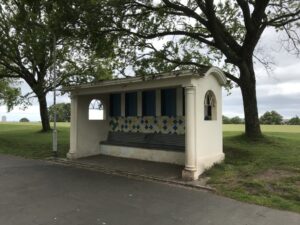 When the park opened in 1931, its only shelter was next to the paddling pools and playground near the main entrance at Milehouse. It was a large, stone-built structure with toilets incorporated and it had some architectural quality. Plans were made for shelters in other parts of the park and contracts let in 1939 but… Read more: Park shelters
- More playgrounds
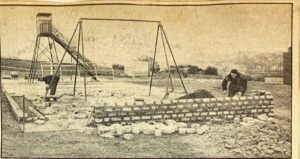 The Milehouse Corner playground was a long way from residential areas around the northern, eastern and southern boundaries of the park and three more playgrounds were made between 1950 and 1965. Glendower Road In 1950, work started on making a playground in the Valley below Glendower Road and it opened for use in 1951. In… Read more: More playgrounds
- Car park trees
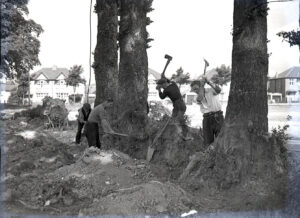 The semi-circular car park on Outland Road was part of the original Mawson design and constructed with the park between 1929 and 1931. A row of former farm trees ran through the car park for several years afterwards as these photos from 1931 and 1948 show. The trees were eventually felled by axe in 1951. … Read more: Car park trees
- Sports changing facilities
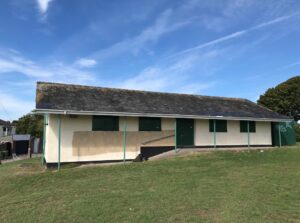 For the first twenty years of the park’s existence, its sports facilities were rudimentary with matches being played on heavy, uneven pitches and teams having nowhere to change. After the war, the Air Raid Precautions warden’s post 4/A/2 by Upper Knollys Terrace was used as a dressing room although it was too small for… Read more: Sports changing facilities
- Lassie Pepper
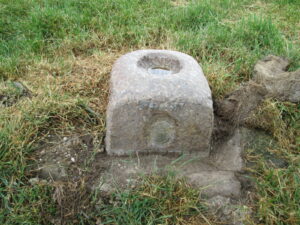 On Saturday, 2nd June 1951, the summer of the Festival of Britain, the Western Evening Herald reported a curious event in its regular column, “A Citizen’s Diary.” “At an informal ceremony yesterday, Mr J Paton Watson, Plymouth City Engineer, turned on a new drinking fountain for dogs in Central Park. The drinking fountain is a… Read more: Lassie Pepper
- Nursery and park depot
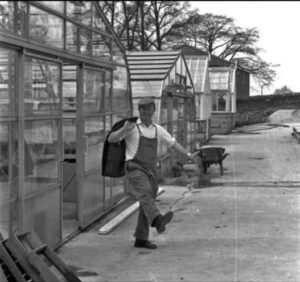 The 1931 plan for the park does not show a depot to support all the usual maintenance functions although Mawson’s earlier report confirms that one was intended as part of the nursery and botanical gardens at the southern end of the park. Instead, a site on the east side of Outland Road opposite the junction… Read more: Nursery and park depot
- Making the Zoo
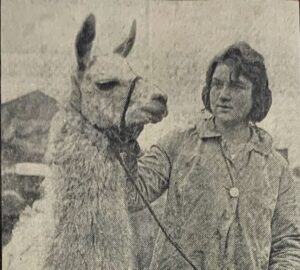 Making a zoo on a 6-acre green-field site in just 6 months from the submission of plans to first opening was a remarkable achievement. Mr James Chipperfield was the person who made it happen with the able support of family members. He had opened a zoo in Southampton earlier in 1961 and wanted to replicate… Read more: Making the Zoo
- Pounds House – social centre, library and other uses
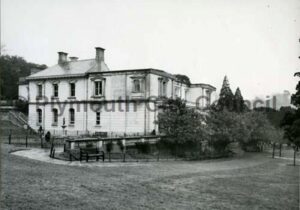 Following completion of the new Civic Centre in March 1962, the Town Clerk and his staff moved there, having been at Pounds House since 1941. Eighteen months later, after lengthy discussions, work started in August 1963 to convert the house into a social and cultural centre. It included replacing the temporary roof above the south… Read more: Pounds House – social centre, library and other uses
- The swimming pool
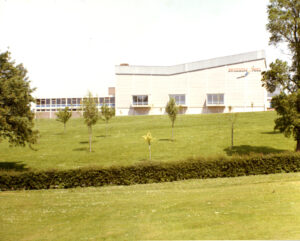 Before and after the second world war, the city had no indoor swimming pool for public use. The outdoor pools at Mount Wise and Tinside were popular on warm summer days but too cold for much of the year. In 1960, the Parks and Recreation Committee recommended that the City Engineer and City Architect should… Read more: The swimming pool
- The golf course
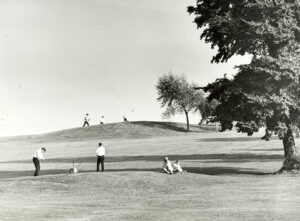 Of all the major developments that took place between 1960 and 1975, only the golf course has survived. Not only that but it has matured as trees have been planted, field drains laid, new hazards added and parallel courses made for frisbee and foot golf. The proposal for a nine-hole miniature golf course came in… Read more: The golf course
- Parking problems
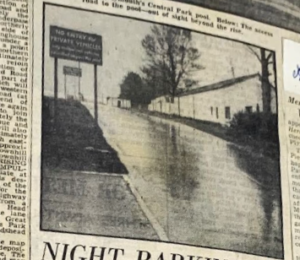 Roads in America were often built with a green verge or ‘park strip’ and stopping there was called ‘parking’. The term took on a quite literal meaning in Plymouth’s Central Park soon after the swimming pool opened in May 1965. The first phase of the pool’s construction included a new access road that led from… Read more: Parking problems
- More trees are planted
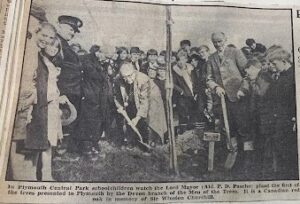 It was third time lucky when the Devon Branch of the charity, Men of the Trees, organised a mass tree planting with 200 children from 15 local schools. The previous two occasions had to be postponed because of bad weather and the event finally took place on 3rd March 1966. According to a report in… Read more: More trees are planted
- The Milehouse road junction
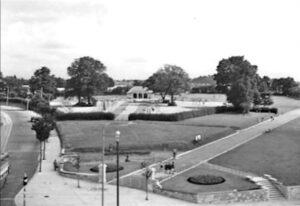 When the park was made, the junction between Alma Road and Outland Road was a simple crossroads, and the park’s main entrance path led from the crossroads. The children’s playground and paddling pools were in the area between the entrance path and Outland Road. In 1966, a report recommended improvements to the road junction that… Read more: The Milehouse road junction
- The Mayflower Centre
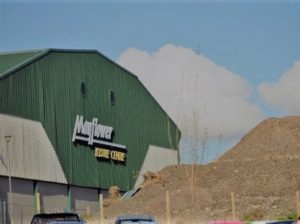 After the swimming pool opened in 1965, Plymouth City Council and sporting interests wanted to establish a sports hall and other facilities in Central Park but they could not make progress while funding was unavailable. The opportunity came in 1969 when, despite stringent restrictions by the government on local authority spending, Plymouth City Council secured… Read more: The Mayflower Centre
- The 3½ and 5 inch gauge miniature railway
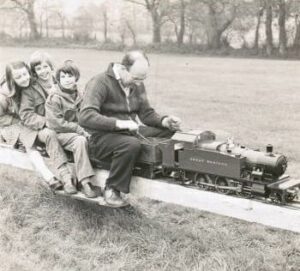 Memories of rides on the 10¼ inch gauge miniature railway during the summers of 1946, 1947 and 1948 might have been the inspiration for something more permanent. In 1970, the Plymouth Miniature Steam Locomotive Society was formed with the aim of providing a track for locomotives which were being built by its founder members at… Read more: The 3½ and 5 inch gauge miniature railway
- Argyle’s training pitches
 As the new manager of Plymouth Argyle in 1972, Tony Waiters wanted the football club to have its own training facilities close to Home Park, the existing ground at Ermington being too far away. He entered discussions with Council officers and they identified an area north of Coronation Avenue opposite the zoo which was open… Read more: Argyle’s training pitches
- The Clock Tower
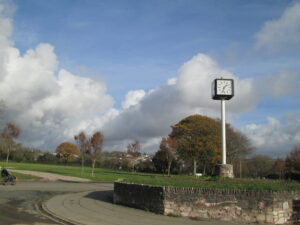 The present clock is the second to occupy the site. More information is sought about the previous clock tower which is believed to have been installed when the park opened in 1931 or soon afterwards. It was certainly still standing when this photo was taken in 1947. The present clock tower was a gift from… Read more: The Clock Tower
- The first Plymouth Skatepark
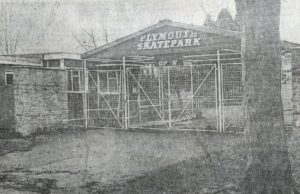 The zoo’s popularity waned during the 1970s and started to incur financial losses. In 1977, the owners, Chipperfields, proposed to keep the quarantine facility and the aviary but to turn the rest of the site into a skateboard centre. Skateboarding was just starting as a new craze at the time. The proposal was agreed… Read more: The first Plymouth Skatepark
- Home Park stadium redevelopment
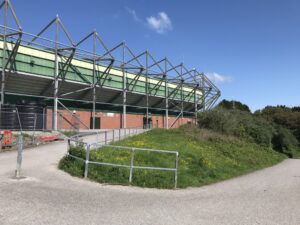 In 2001, Plymouth Argyle applied to redevelop the Home Park stadium in phases. Phase 1 was to replace the Lyndhurst (north), Devonport (west) and Barn Park (east) stands with the present horseshoe, whilst phase 2 would address the Mayflower stand later. Planning permission was granted for phase 1 in April 2001 and work started in… Read more: Home Park stadium redevelopment
- Coronation Avenue, Tree Preservation Order
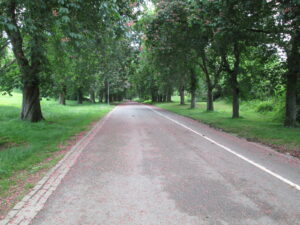 The avenue of red horse chestnuts planted by school children for the coronation of King George VI was made the subject of a Tree Preservation Order on 26th July 2001. It is unusual for a Local Authority to impose a TPO on its own trees and the reason is not stated. It was possibly done… Read more: Coronation Avenue, Tree Preservation Order
- Peverell Park
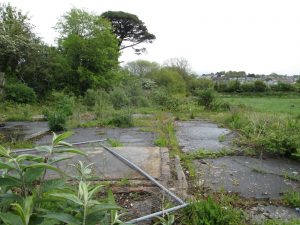 The twin demands of paying the rent for its Peverell Park ground and making the improvements needed meant that Plymouth Cricket Club’s finances were often a struggle. Part of the problem was its open boundary with the rest of Central Park which made it difficult to charge for entry. In 1935, a fence was erected… Read more: Peverell Park