

Category: The Early Years
-
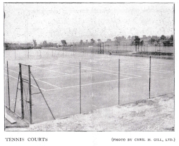
The first tennis courts
When Mawson designed Central Park in 1928, four grass courts already existed on the southern side of the Home Park stadium where the Home Park Tennis Club played, and there was a grass court at Higher Swilly Farm which appears to have been made by the Cundy family before they left in 1927. Unlike the…
-
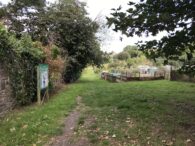
Allotments
The original plans for the park made no provision for allotments although they already existed in three places. In the southern area of Exhibition Fields, behind Upper Knollys Terrace, they lay either side of the informal path that ran between Pennycomequick and Home Park. In the north of the park, there were allotments in the…
-
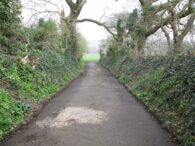
Paths are made
The names of paths and how they were named are here. When the park’s construction began in 1930, Gilbert Lane and Venn Lane already existed as a farm track and an ancient thoroughfare respectively. The map survey of 1914 also shows a path along the southern part of the Valley which appears to end near…
-
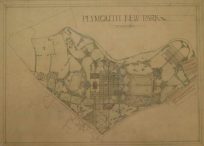
Designs for a new park for Plymouth
Plymouth Corporation appointed Mawson and Sons of Westminster to design the new park on 27th March 1928. Thomas H Mawson was one of the most prolific and influential landscape architects of his time and his appointment shows the Council’s determination to have the very best for the city’s new park. It was to be Mawson’s…
-
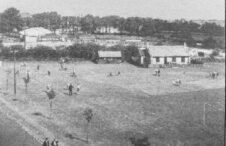
Gilbert Cottage
Seventy yards east of the Life Centre on Gilbert Lane is a small gate opening onto Cottage Field. Originally, this would have led to Gilbert Cottage, from which Cottage Field takes its name. The cottage was probably built for a farm worker and it remained when the land was purchased for Central Park in 1925. …
-
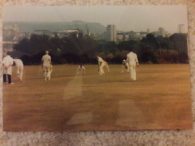
The Cricket Field
Cricket was played on the ground at Peverell Park before the land was purchased as part of Central Park. Plymouth Cricket Club has provided the following accounts from 1924 and 1925: 1924 At a January meeting, it was announced that owing to the Beacon Park pitches being unavailable for the coming season, it had been…
-
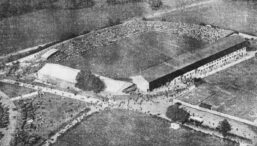
Home Park stadium – the early years
Central Park was designed and laid out around most of the existing features including the Home Park stadium. They have all been a big influence on the park’s subsequent development but none more so than the football stadium and its resident football club. When Argyle moved into Home Park in 1900 from their previous ground…
-
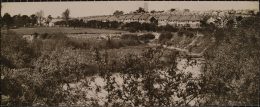
The Reservoirs
The Stonehouse Leat was never ideal as a source of water due to the low gradient along its length. By 1833 the demand for water was increasing due to expanding housing and, in an attempt to meet the demand, some open-ditch sections of the Stonehouse Leat were replaced with lead pipes. In 1860, it was decided…
-
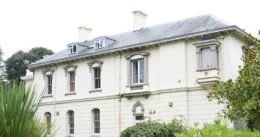
Pounds House – a fashionable residence
Pounds House and grounds were purchased by the City Corporation in 1927 in one of the three parcels of land to form the future park. In 1928, Mawson’s report to the Hoe and Parks Committee noted that the house was in an extremely bad state of repair but worthy of renovation. He proposed that,…
-
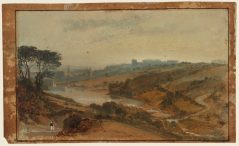
‘Stoke Damerel and Stonehouse Creek from Plymouth’ JWM Turner
This view of Stoke Damerel and Stonehouse by JWM Turner appears to have been painted from what is now North Road East, above the railway station. The painting shows Stoke Damerel church tower and the spire of St Aubyn’s Devonport, with the creek at Pennycomequick in the foreground touching the lower slopes of what is now…